Life is full of surprises. Some surprises are fun, like a birthday party. Others are stressful, like a sudden illness or a broken phone. To handle the stressful ones, you need a plan. That plan is called an Emergency Fund.
Think of an emergency fund as your financial superhero shield. It protects you and your family when things go wrong. In this guide, we will show you how to build this safety net using simple steps and the right tools from Global IME Bank.
What is an Emergency Fund?
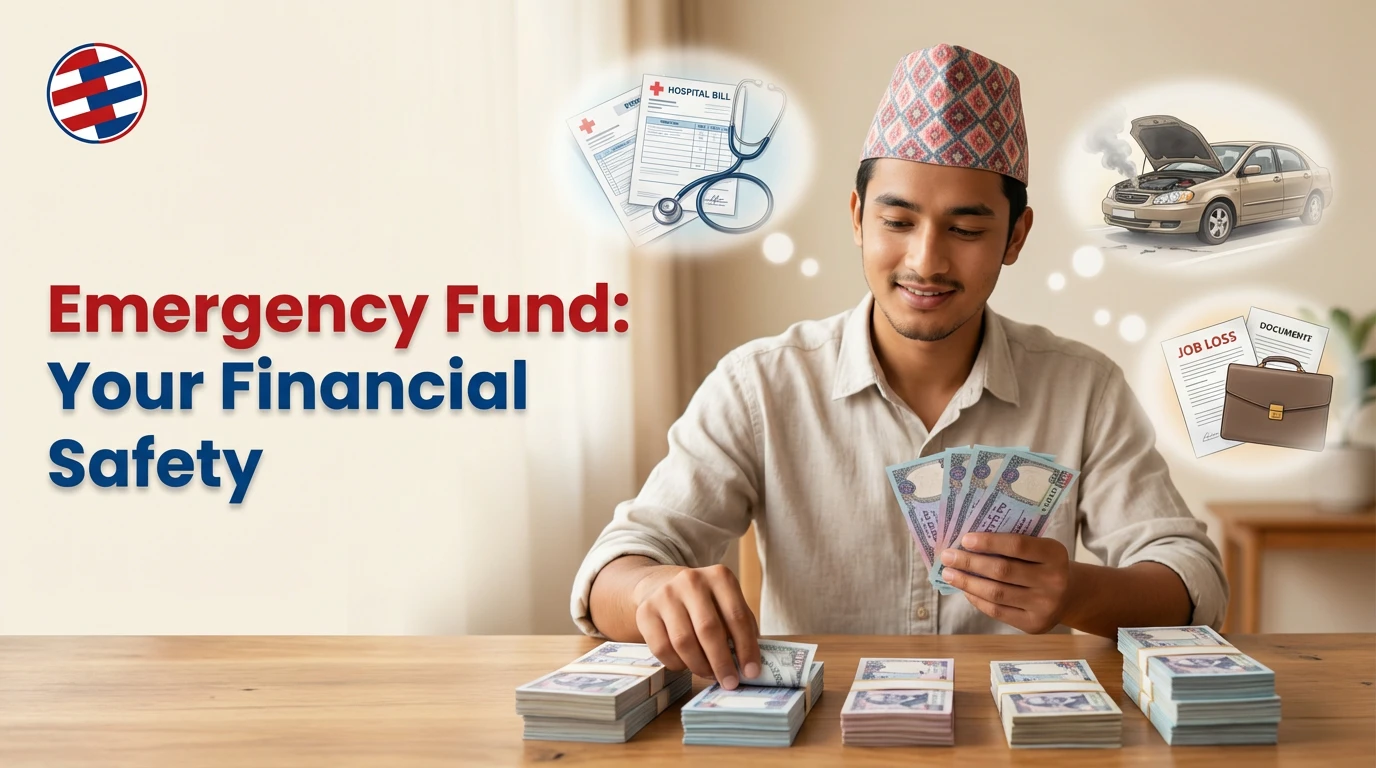
An emergency fund is money you save for unexpected problems. It keeps you safe if something goes wrong. You keep this money for unexpected expenses like medical bills, urgent repairs, or if a family member loses their job.
Important Tip: An emergency fund is NOT for buying a new video game or going on a holiday. Regular savings are for your “wants,” but an emergency fund is only for your “needs” during a crisis.
Why Do You Need an Emergency Fund?
You need an emergency fund because life is unpredictable. Without it, a small problem can turn into a big financial disaster.
- It stops debt: If you have no savings, you might have to borrow money and pay back more with interest. An emergency fund lets you pay for things yourself.
- It lowers stress: You sleep better knowing you have money to fix problems.
- It protects your future: You won’t have to touch your long-term savings (like money for college) if an emergency pops up today.
How Much Money Do You Need? (The 3–6 Month Rule)
This is the most important part. To know your target, you must look at how much your family spends every month. Experts suggest saving enough to cover 3 to 6 months of living expenses.
Step 1: Calculate Your Monthly Expenses
Write down how much money your family spends in one month on essentials. This includes:
- Food and groceries
- Rent
- Electricity and water bills
- School fees and transport
- Mortgage payments
Example: Let’s say your family spends NPR 25,000 every month on these basic needs.
Step 2: Multiply to Find Your Goal
Now, decide if you want a 3-month or a 6-month safety net.
- For a 3-month fund: 25,000 × 3 = NPR 75,000
(This is great for people with steady jobs.) - For a 6-month fund: 25,000 × 6 = NPR 150,000
(This is better if you want extra security or have a large family.)
Why 3 months? It usually takes about three months to find a new job or recover from a health problem.
Why 6 months? Some problems take longer to solve. Having six months of money gives you total peace of mind.
Where Should You Keep Your Money?
You should keep your emergency fund in a place that is safe but easy to reach. At Global IME Bank, we offer two great options that balance “access” and “growth.”
1. Global IME Savings Account
This is the best place for your first few thousand rupees.
- Liquidity: You can get your money instantly using an ATM or the Global Smart Plus app.
- Safety: Your money is safe in the bank and earns a bit of interest while it sits there.
2. Fixed Deposit (FD) Laddering
If your fund gets bigger, you can use “Laddering” to earn more interest. Instead of locking all your money in one long-term deposit, you split it.
- Put some in a 3-month FD.
- Put some in a 6-month FD.
- This way, some money becomes available every few months, but you earn much higher interest than a regular account.
How Do You Build an Emergency Fund Step-by-Step?
You don’t need to save a huge amount all at once. Small steps lead to big results.
- Set a Target: Use the math we showed above to pick your goal (NPR 75,000 or NPR 150,000).
- Start Small: Even saving NPR 500 a week helps. Use the Global Smart Plus app to set up “Automatic Transfers.” This moves money from your main account to your savings account automatically.
- Cut Small Costs: Skip one expensive snack or a movie outing. Put that extra cash into your fund.
- Keep it separate: Do not keep your emergency money in your daily spending account. If you see it there, you might spend it on chocolate!
- Replenish: If you use the money for a real emergency, start adding money back into the fund as soon as you can.
You can also use the “Schedule Payment” option in the Global Smart Plus app to transfer a certain amount to your emergency fund or recurring deposit account.
When Should You Use the Fund?
Ask yourself these three questions before you touch the money:
- Is it unexpected? (A broken pipe is unexpected; a festival is not.)
- Is it necessary? (Medicine is necessary; a new pair of sneakers is not.)
- Is it urgent? (Does it need to be fixed today?)
Good reasons to use it: Job loss, hospital bills, or urgent house repairs.
Bad reasons to use it: Buying a new phone, going on a trip, or shopping during a sale.
Tips for Managing Your Fund
- Pay off high-interest debt: If you owe money elsewhere, use half your savings to pay that debt and half for your fund.
- Don’t overfill it: Once you reach your 6-month goal, stop! Use any extra money to invest in things like stocks or gold to grow your wealth.
- Use the EMI Calculator: Before you take any loan, use the Global IME Bank EMI Calculator. This helps you see if the monthly payment is too high for your budget.
Key Takeaway: Get Started Today
An emergency fund is your “financial umbrella.” It keeps you dry when life starts raining problems. You don’t need a lot of money to start. You just need to be consistent. Open a separate savings account at Global IME Bank today and build your path to a stress-free life.
FAQs
What is the best bank for an emergency fund in Nepal?
Global IME Bank is an excellent choice because we offer the Global Smart Plus app for easy tracking, automated scheduled saving and savings accounts to help your money grow.
Can I use my emergency fund for a wedding?
No. A wedding is an event you can plan for. You should save for a wedding in a separate “Goal Savings” account.
How do I rebuild my fund after using it?
Treat your fund like a bill you have to pay. Every month, set aside a fixed amount until your fund reaches its target again.