Managing finances is one of the most important skills one should have. With rising living costs and inflation, it is really hard to stay financially balanced. That’s where Personal Financial Management comes in. Whether you are a student, an employed person, or a business entrepreneur, managing personal finance is important for financial success.
What is Personal Financial Management?
Personal Financial Management means planning and managing your financial activities, such as budgeting, saving, investing, and managing debt, to achieve financial security. It involves making right decisions on how you earn, spend, save, and invest.
Importance of Managing Personal Finances
- It helps to achieve financial goals: whether buying a home, funding for education, or starting a business, managing money helps in achieving goals.
- It prepares you for emergencies: A properly mapped budget helps in building an emergency fund for unforeseen occurrences, such as medical problems and losing jobs.
- Reduce financial stress: Tracking your spending and having a plan reduces stress and improves mental health.
- Improves saving habits: Tracking expenses helps to eliminate unnecessary expenditure and encourages saving.
- Avoid unnecessary debt: The use of a budget allows you to live within your means and avoid high-interest loans or credit card debt.
Key Components of Personal Financial Management
1. Budgeting
Budgeting is the first step in Personal Financial Management. A budget helps you track income, expenses, and savings, ensuring you live within your means.
How to create a budget?
- List all the income sources: First, list down all the income sources, like salary, rent, or side hustles.
- Track Expenses: Track all the necessary expenses like rent, food, transportation, utilities, etc.
- Categorize Spending: Categorize spending into needs, wants, and savings and allocate budget accordingly.
You can use traditional notebooks, Excel, or any budgeting apps for budgeting.
You can use Global Smart Plus’s built-in Budget360° feature to create budgets and track expenses.
2. Saving
Develop a saving habit by setting aside a certain portion of your income every month. Saving helps in emergencies like medical emergencies and job loss.
Tips for saving
Open a separate savings account and start saving monthly. Automate saving by setting a certain percentage of income. Define a goal-based saving.
Build an emergency fund that covers at least 3-6 months of expenses, which will be helpful in emergencies like medical necessity and job loss.
3. Investing
Saving alone is not enough to grow wealth. Allocate a certain portion of income to investing also, which helps to grow wealth over time. Invest in short-term and long-term assets that provide returns over time.
Some of the popular investing options in Nepal are fixed deposits, mutual funds, the stock market, real estate, etc. Diversify your investments to reduce risk. Do research before investing.
4. Debt Management
Due to increased use of credit cards and personal loans, debt is common nowadays. Do not borrow money for things that are not essential. Clear high-interest loans first, and do not have several loans at once. Use credit cards wisely; always pay the full balance monthly to avoid extra interest.
Key Challenges of Personal Finance in Nepal
Although Personal Financial Management is important for financial success, there are many challenges.
- Low Financial Literacy: Still, many people lack knowledge about budgeting, saving, and investing, especially in rural areas.
- Irregular Income Streams: Even today, a large portion of the population relies on seasonal jobs, remittance, or informal work, making consistent financial planning difficult.
- Limited Access to Financial Services: Despite growing digital banking, many still lack access to formal banking, insurance, or investment platforms, especially outside urban centers.
- Cultural Spending Habits: Social functions like weddings, festivals, and religious events often lead to overspending, which reduces saving or even increases debt.
- Inflation and Rising Living Costs: Daily expenses are increasing, but income growth is slow, reducing saving capacity.
How to Manage Personal Finances in Nepal
Efficient Personal Financial Management could not be achieved without proper planning and strategies.
- Track Your Income and Expenses: Use a notebook, spreadsheets, or any budgeting apps to track income and expenditure.
- Set Financial Goals: Create short-term goals like buying a bike and planning for vacation and long-term goals such as buying a house and children’s education.
- Create a Budget: Make a detailed budget of your finances. Utilize the 50/30/20 rule or the envelope method.
- Build an Emergency Fund: Try to save money to cover at least 3 months of living expenses against emergencies like health problems or loss of a job.
- Start Investing: Even small monthly investments can grow significantly over time. It is essential to invest in equity, SIP, bonds, etc, which, over a while, helps to increase wealth.
- Insurance: Get life and property insurance to cover health and property.
Common Personal Finance Mistakes to Avoid in Nepal
- Spending too much and living beyond your means
- Failure in planning for retirement
- Too much reliance on informal loans or high-interest credit
- Failing to monitor expenditure periodically.
- Ignoring available savings and investment opportunities
Best Apps for Personal Financial Management in Nepal
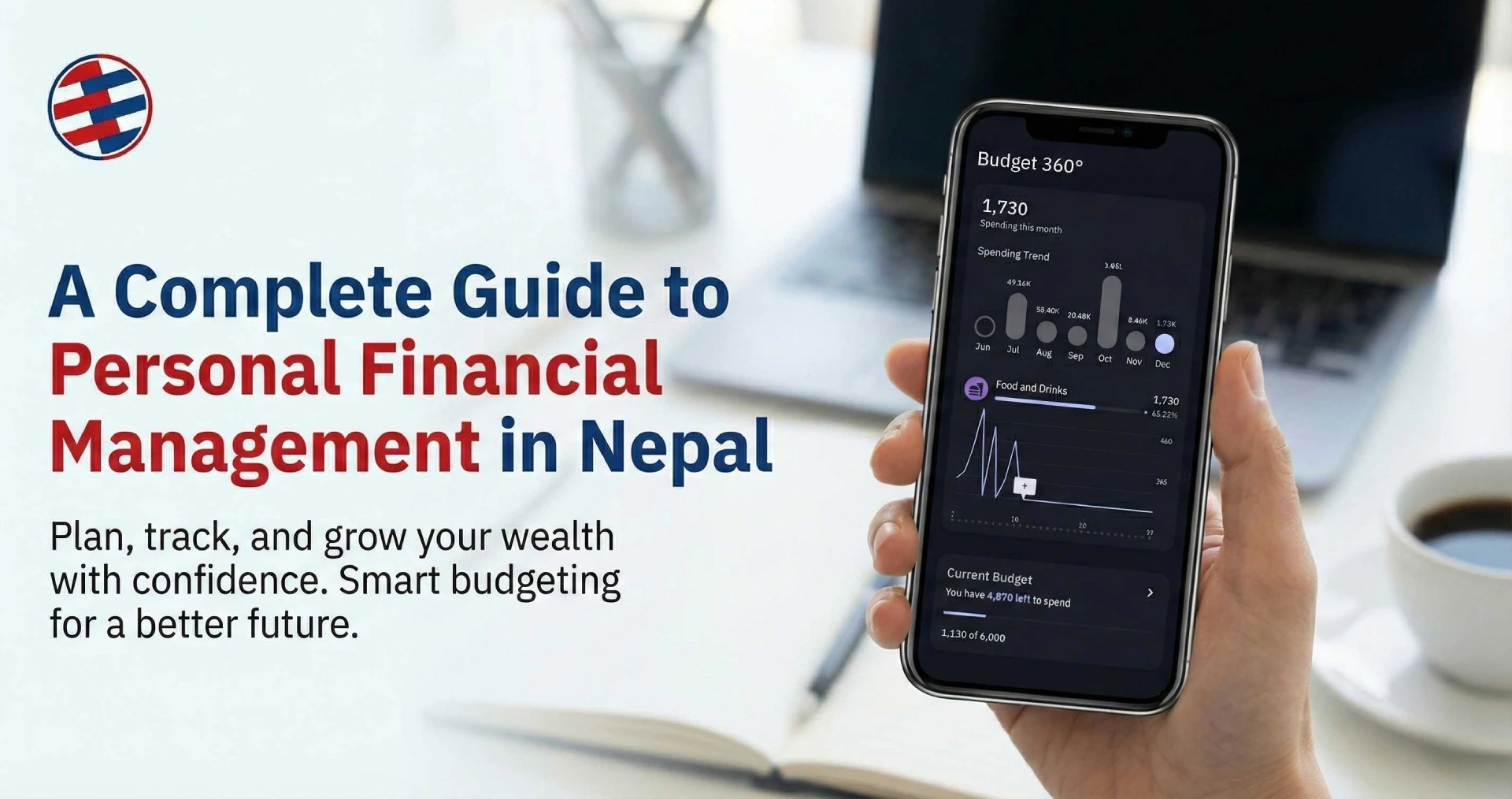
If you are looking for a Personal Financial Management app in Nepal, Global IME Bank now offers a Budget 360°, an advanced Personal Financial Management tool now integrated in the Global Smart Plus app.
With Budget 360°, users can easily manage their funds and understand the spending pattern. Users can set the budget under various categories like groceries, travel, food and drinks, bills and utilities etc and track the expenditure in real time.
How to use and set up Budget 360°?
To use Budget 360° users must have an account on Global IME Bank and use mobile banking. Also you should pay any expenses via Global Smart Plus. This helps to track income and expenditure. To use Budget 360° follow the below steps:
Step 1: Open a Global Smart Plus app and navigate to the Hub section and click to Budget 360° to get started.
Step 2: Set a Budget for a month.
Step 3: Create a budget by adding spending categories like Transportation, Groceries, Health and Wellness, Entertainment, Education, Travel etc.
Step 4: Add the amount you want to allocate in the selected category and click continue.
Now you can track the spending budget set on different categories. This helps to analyze the spending expenditure of one month. With this users can track the expenditure and make a plan.
Conclusion
Personal financial management becomes more necessary in today’s world. By following some fundamental steps like budgeting, savings, and investment, as well as effectively taking care of your debt, you will be able to enjoy a secure financial life. Educate yourself, take professional advice, use digital tools to stay on top of your financial goals.
Frequently Asked Questions (FAQs)
What is the best way to start Personal Financial Management in Nepal?
Start with a simple budget. Keep track of your income and expenditure and aim to save at least 20% of your income.
How much should I save monthly in Nepal?
Use Budget 360° and pay all the expenses through Global Smart Plus app to track income and expenses.
Is Personal Financial Management helpful even if income is low?
Yes, managing limited income is even more important to avoid debt and build discipline.