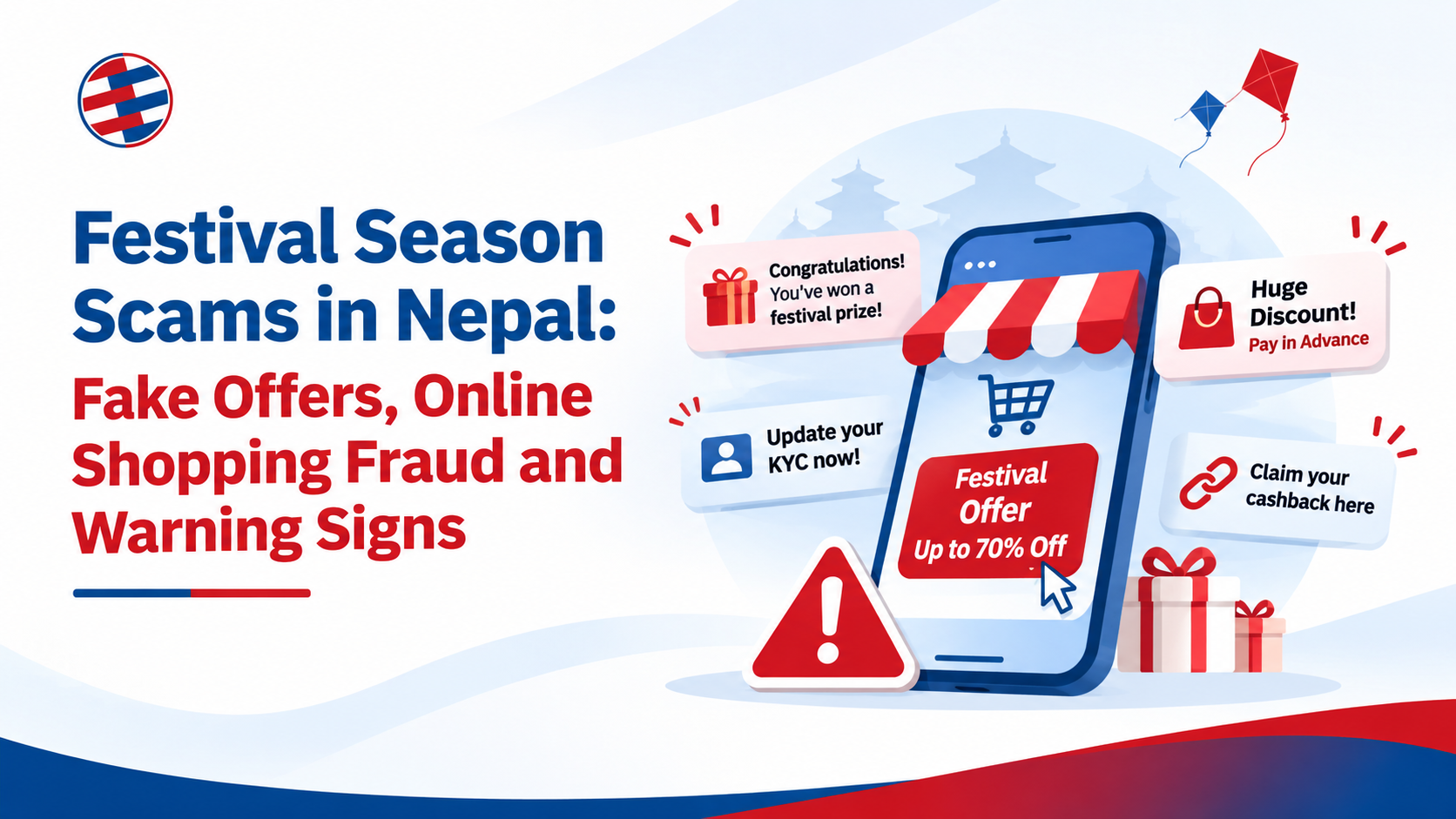
Festivals such as Dashain, Tihar and Chhath are good times for discounts, offers and gift purchases. There are lots of people who enjoy purchases through the internet and also using digital payment services to buy clothes, electronic devices and gifts for their loved ones.
It is an opportunity for the scammers also. There can be many frauds taking place on social media sites such as Facebook, Instagram and WhatsApp that involve fake discount offers, lotteries and online shopping pages.
The Financial Intelligence Unit at Nepal Rastra Bank has recently released a warning about online fraud, including fake festival offers, phishing, fraudulent shopping sites, and identity theft.
Common Types of Online Scams and Fraud
Understanding how online fraud works is the first step towards preventing it. Here are some common scams that individuals should be aware of, particularly during festive seasons.
1. Fake Festival Offers and Lottery Scams
Festive seasons often bring attractive discounts, promotional campaigns, and special offers. Fraudsters take advantage of this excitement by circulating fake messages through social media platforms such as Facebook, WhatsApp, Viber, and Messenger.
Messages claiming that someone has won a Dashain bumper prize, Tihar gift hamper, or exciting lottery reward may appear genuine. However, these messages often contain suspicious links and request advance payments in the name of processing fees, taxes, or service charges.
How to stay safe:
– Beware of any prize notification and offer which sounds unrealistic.
– Verify the promotional campaigns through the official websites and social media handles of the concerned organization.
– Do not make advance payments for claiming any prize award.
– Never give your personal and banking details for any such offer.
2. Phishing & Digital Banking Fraud
Phishing is a common scam, where criminals pretend to be legitimate organizations like banks or digital wallets to obtain personal data.
Fraudsters create a duplicate website or send a message saying that your bank account or digital wallet will be blocked if you do not update the KYC information immediately.
Such emails will include links to websites created by scammers, where they will ask for your username, password, PIN code, and One-Time Passwords (OTPs). After receiving all this information, the criminals will try to get unauthorized access to your accounts and transactions.
How to stay safe:
– Never give your OTP, banking password, or PIN code to any person.
– Never submit personal information through the links that were sent to you via email.
– Contact your bank in case of any suspicious emails about your account or KYC information.
3. Fake E-commerce and Online Shopping Pages
Another scam problem that arises during festivals is fake e-commerce sites or online shopping pages where the scammers advertise the luxuries of fashion wear, shoes, electronic gadgets, and other gift items for the festivals with heavy discounts.
They use good pictures of the product along with logos and even customer feedback to appear more real. They take the advance payment from the customer and once receive the payment they block them or delete the page.
How to stay safe:
– Purchase from well-known and authentic online shopping sites.
– Review the customer feedback, page history, and contact details before ordering any item.
– Never make advance payments to any unverified seller.
– If possible, choose cash on delivery payment method while buying from any unknown seller.
4. Identity Theft and Document Fraud
Identity theft happens when a person steals an identity to use someone else’s personal information for fraudulent purposes.
Cyber criminals might abuse someone’s citizenship information, photos, identification documents, and many more to make false social media identities or even create accounts under another person’s identity.
These things will harm one’s reputation as well as could give them trouble legally and financially.
How to stay safe?
– Report fake social media accounts pretending to be you, your family members, or people you know.
– Let the authorities know in case of misusing of identity documents.
How to Avoid Online Scams and Digital Banking Fraud
While online fraud continues to evolve, there are a few security practices you can adopt to help minimize the risk of falling victim to online fraud.
Never Share your OTP, Password, or PIN
OTP, password, and/or PIN should be kept confidential and not shared with anyone. Be aware that bank representatives will never make a call or message you to request your banking credentials, OTP, password, PIN or credit/debit card details.
Never Click Suspicious Links
Fraudulent links are widely shared. These links can come via a text message, email, or message on social media. These links may offer rewards or discounts, KYC update requests, create a sense of urgency, etc. Always verify the authenticity of the message, source and link before taking any action.
Shop Only on Trusted Online Platforms
When making purchases online, always check that the seller is legitimate. Always check customer reviews, business information and price. Never send money to a seller that you don’t know and are not verified.
Always Verify Website URLs Before Making Digital Payments
Fraudulent websites look almost identical to the websites of legitimate banks and businesses. Double check the website address before entering any of your banking details. Only access financial services using trusted sources and applications.
Be Careful When Sharing Personal Information Online
Posting your personal information online gives identity thieves and fraudsters the information they need to commit identity theft, impersonation and/or financial fraud. Don’t post private information on public social media profiles.
What Should You Do If You Become a Victim of Online Fraud?
In case you have made the payment to the scammer or entered your personal information in the suspicious website, take action as soon as possible.
1. Contact your bank or digital wallet service
Report the transaction and provide the transaction details, and contact the bank immediately.
2. Collect Evidence
Collect all evidence related to the issue such as screenshots of messages, advertisements, payment details, seller’s profile and conversation.
3. Report the incident to Nepal Police
You can report financial fraud to the Nepal Police Cyber Bureau or visit the nearest police office.
4. Don’t make additional payments
Don’t make any further payments to any person saying that they will deliver your item or will return back your money.
Celebrate the Festivals Without Falling for Fake Offers
Festivals are a time for celebration, shopping and sharing happiness with families and relatives. But sometimes, misleading discounts, surprise offers, and promotions could end up in financial loss. Always make sure that the seller is genuine before purchasing and paying money online.
Global IME Bank encourages customers to use verified banking channels, check payment details carefully and report suspicious activities immediately.