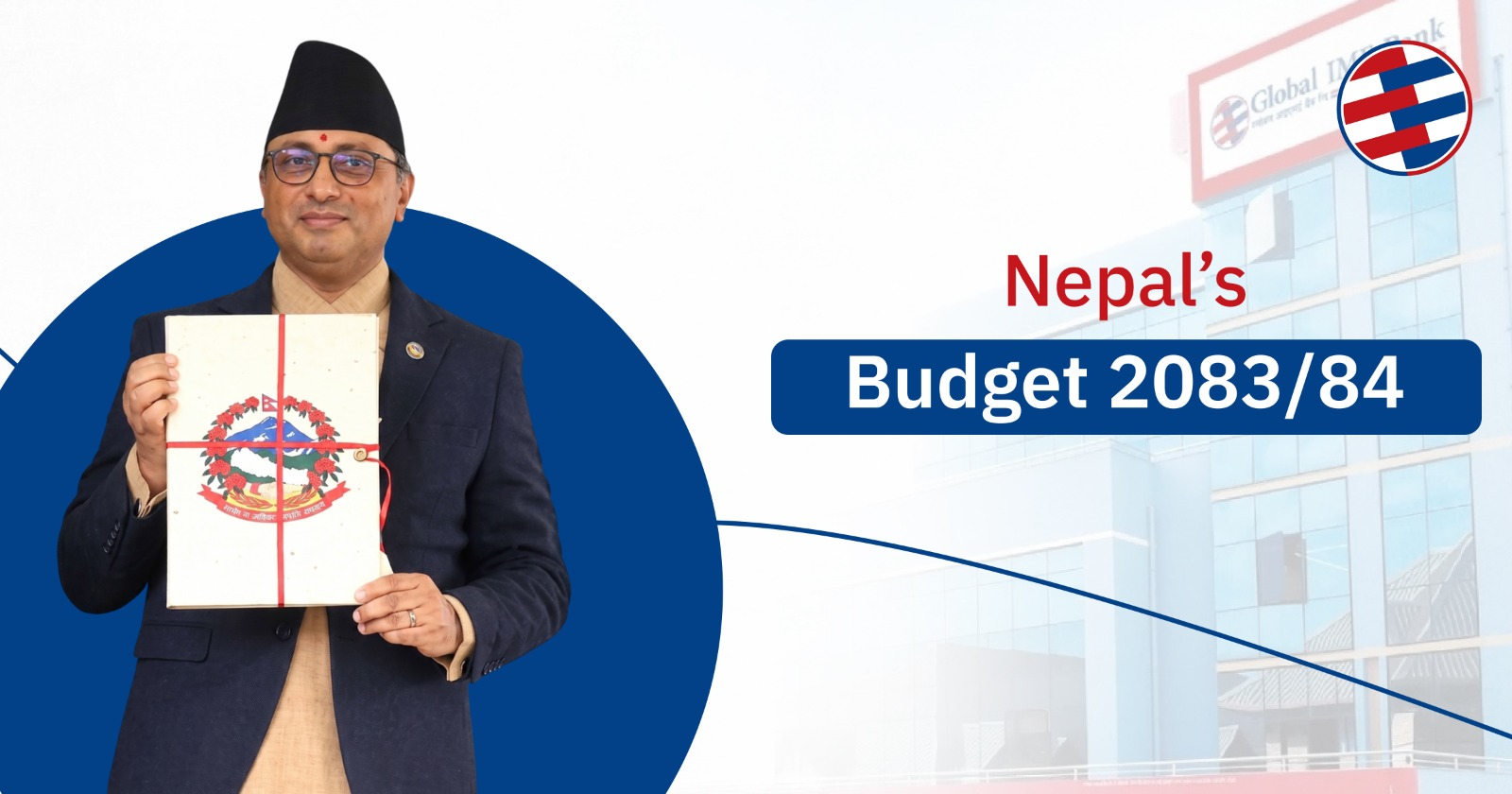
On June 15, 2026 (Jestha 15, 2083), Finance Minister Dr. Swarnim Wagle presented the national budget for the fiscal year 2083/84 in the Federal Parliament. With a total size of Rs 2.124 trillion, the government has focused on tax relief, government efficiency, infrastructure development, and economic transformation.
Budget Size and Expenditure Breakdown
The total budget expenditure for 2083/84 stands at Rs 2.124 trillion. It is divided into three major parts:
| Expenditure Category | Amount | Description |
| Current Expenditure | Rs 1.27 trillion (59.8%) | salaries, allowances, and administrative costs |
| Capital Expenditure | Rs 431.10 billion (20.3%) | infrastructure and development projects |
| Financial Management | Rs 422.64 billion (19.9%) | debt repayment and financial obligations |
How the Budget Will Be Financed
The government plans to collect funds from the following sources:
- Revenue Collection (Taxes & Non-Tax): Rs 1.405 trillion
- Foreign Grants: Rs 61.74 billion
- Foreign Loans: Rs 247.29 billion
- Domestic Loans: Rs 410 billion
Macroeconomic Targets
The government has set ambitious goals for the coming year:
- Economic Growth Target: 7%
- Per Capita Income: USD 1,535
- Inflation Target: To be maintained within 6%
Major Sector-Wise Allocations of Budget 2083/84
| Sector | Allocation (Rs. Billion) | Key Programs / Priorities |
| Education | 218.3 | School reforms, scholarships, AI & technology education, infrastructure mapping, expansion of medical education |
| Infrastructure (Roads, Urban Development) | 286.48 | 1,000 km road blacktopping, 275 bridges, East-West Highway upgrade, Fast Track, urban infrastructure |
| Health | 101.95 | Health insurance expansion, 336 basic hospitals, free cancer treatment for children, safe motherhood programs, social health protection |
| Social Security | 120 | Social allowances, child nutrition support, disability rehabilitation, vulnerable group assistance |
| Drinking Water and Sanitation | 37.17 | Safe and clean drinking water, expanding pipe networks, Tarai-Madesh Infrastructure |
| Energy | 85.54 | 1040 MW hydropower, 370 MW solar power, transmission and distribution lines construction |
| Irrigation | Irrigation facilities to additional 15,800 hectares,Sunakoshi-Marin Diversion, Sikta Irrigation Project, Babai Irrigation and Bheri-Babai Diversion Project | |
| Agriculture & Livestock | 46.42 | Fertilizer subsidies, crop insurance, National Agricultural Modernization Program, farmer incentives |
| Defence & Security | 64.96 | Army, police, border security, national security operations |
| Sports | 4.03 | Football stadium upgrades, cricket stadiums, indoor multipurpose stadiums, lifelong healthcare for international medal-winning athletes |
| Forest, Environment & Climate | 12.31 | Chure conservation, medicinal herb processing, wildfire management using drones and satellites |
| Information Technology & AI | 5.93 | Sovereign AI Compute Center, Fintech Marketplace, digital government services, Nagarik App integration |
| Science, Technology & Innovation | 4 | Nepal Enterprise Facility, startup support, research and innovation funding |
| Labor & Employment | 3.63 | Labor registry, returnee migrant programs, skill-based foreign employment |
| Industry, Commerce & Supplies | 10.14 | Industrial infrastructure, production incentives, electric boiler conversion, mining access roads |
| Tourism & Culture | 7.34 | Visit Nepal Year 2085, Greater Lumbini Development, Janakpur wedding destination, tourism promotion |
| Civil Aviation | 2.93 | Tribhuvan International Airport upgrade, Nijgadh Airport planning |
Major Tax Reforms
The budget introduces several taxpayer-friendly reforms to reduce burden and encourage compliance.
| Tax Category | Key Reform | Details |
| Personal Income Tax | Exemption limit doubled | Raised to NPR 1,000,000 |
| Highest Tax Slab | Reduced by 10 percentage points | Relief for high earners |
| Customs Duty | Reduced on 273 raw materials | One tier lower than finished goods |
| Customs Tariff Slabs | Simplified | From 11 tiers to 7 tiers |
| Excise Duty | Abolished on 360 items | Removed from selected goods |
| Green Tax | Introduced | Merger of scattered taxes (e.g., infrastructure tax, road maintenance) |
| Digital Payments | 10% VAT rebate | Instant discount on digital invoices |
| Tax Dispute Resolution | Amnesty scheme | Pay 1% of disputed amount; fines and interest waived |
Key Budget Priorities of Nepal Budget 2083/84
- Ensuring responsible governance, financial discipline, and economic reform for sustainable national growth
- Boosting economic activities, increasing market demand, and creating a business-friendly investment environment
- Attracting foreign investment and Non-Resident Nepali (NRN) participation through capital market and policy reforms
- Strengthening the financial sector through credit access, alternative investment instruments, venture capital, and startup financing
- Promoting industrial growth, entrepreneurship, innovation, and private sector expansion to increase production and competitiveness
- Expanding Nepal’s digital economy through AI infrastructure, fintech development, and advanced technology investment
- Establishing Nepal as a regional hub for AI and digital services using clean hydropower energy and computing infrastructure
- Supporting startups and technology businesses through subsidized AI resources, innovation programs, and investment incentives
- Creating legal frameworks for remote work, digital services, and easier foreign investment and profit repatriation
- Prioritizing technical education, IT training, and youth skill development to prepare manpower for the future economy
- Modernizing agriculture by increasing commercialization, productivity, and technology-based farming practices
- Creating employment opportunities for youth through entrepreneurship, industrialization, and digital economy expansion
- Investing in education, healthcare, and overall human capital development to improve the quality of life
- Increasing exports, promoting digital exports, and reducing dependence on imports for stronger economic stability
- Developing large-scale infrastructure, energy systems, fuel security, and strategic national projects
- Establishing strategic national funds such as the Sovereign Wealth Fund and Matribhumi Kosh for long-term development
- Improving governance and public service delivery through major legal, policy, and administrative reforms
- Promoting balanced and inclusive development across all provinces and regions of Nepal
- Preparations for Visit Nepal 2085 and Nepal Health Year 2027 to boost tourism and health tourism
- Upgrading football stadiums with modern facilities and floodlights
Construction and modernization of cricket infrastructure in major cities across the country