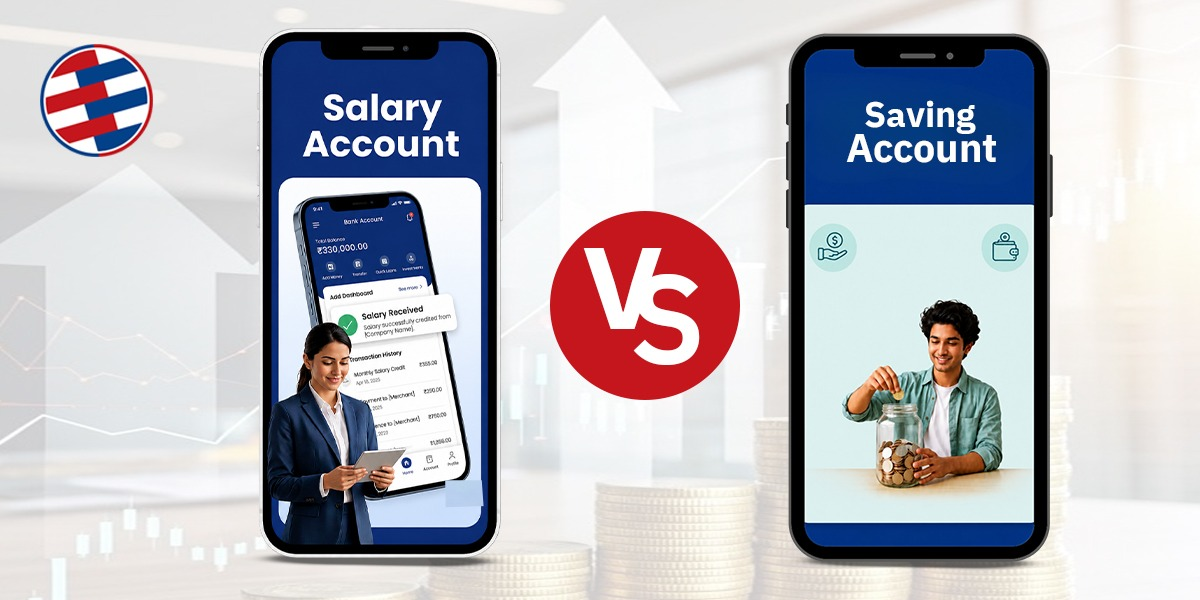
A salary account and a savings account may appear similar as both allow you to deposit money, withdraw cash, receive transfers and avail regular banking services. But the purpose, eligibility of these accounts are different.
What Is a Savings Account?
A savings account is a general-purpose bank account open to anyone. You deposit money whenever you like, earn interest on your balance, and withdraw funds as needed.
There’s no employer involved. You open it on your own, fund it yourself, and use it however suits you — daily expenses, emergency funds, or long-term savings.
What Is a Salary Account?
A salary account is a type of bank account designed for employees who receive their wages or monthly salary through the banking system.
Although it is called a salary account, it generally works like a savings account. Account holders can deposit additional money, withdraw cash, make online payments, transfer funds and use other banking services.
Salary Account vs Savings Account: Key Differences
The key difference between a salary account and savings account is their purpose and eligibility criteria.
Purpose of the Account
The salary account is mainly used for salary deposits. It makes it easier for the employers to distribute salaries.
A savings account is used for personal money management. It can receive salary, business income, remittance, freelance payments and personal deposits.
Eligibility Requirements
Salary account eligibility is usually linked to employment. The bank may require confirmation from the organization, an employment letter, salary details or participation in an institutional payroll arrangement.
A savings account is normally available to all groups of customers.
Minimum Balance
Many salary accounts provide a zero-balance facility because the account is expected to receive regular salary payments.
Savings accounts may require a minimum balance, although some banks also offer zero-balance savings products.
Both the Global Navaratna Salary Account and Global Normal Saving currently offer a zero minimum balance.
Salary Deposits
Regular salary deposits are the main purpose of a salary account. Employers transfer the employee’s monthly payment directly into it.
A savings account can also receive salary payments, but it is not necessarily part of a formal payroll package.
Interest Earnings
Salary accounts and savings accounts may both earn interest because many salary products are structured as specialised savings accounts.
However, the interest rate may differ depending on the bank, product type, balance and current rate schedule.
Transaction Flexibility
Both accounts can normally be used for deposits, withdrawals, payments and transfers.
A salary account may be more beneficial for payroll-related banking, while a savings account offers greater independence.
| Feature | Savings Account | Salary Account |
| Who can open it | Anyone | Usually opened via employer |
| Purpose | General saving and spending | Receiving monthly salary |
| Minimum balance | Often required (though some are zero-balance) | Typically zero balance |
| Interest earned | Yes | Yes |
| Ideal for | Everyone, including students and self-employed individuals | Salaried employees |
Which One Should You Choose?
Choose a salary account if you are employed, your organisation deposits salary through the bank and the account provides useful payroll benefits.
Choose a savings account when your income comes from different sources, you want flexibility or you are saving for long-term goals.
Many salaried people keep both. The salary account is used to manage income and monthly expenses, while the savings account is used to keep money set aside for future needs.
Explore Global IME Bank Account Options
Whether you’re looking for an account to receive your monthly salary or manage your everyday savings, Global IME Bank offers account options designed to suit different financial needs.
Global Navaratna Salary Account
The Global Navaratna Salary Account is designed for salaried individuals who have their monthly salaries credited into the account. The account comes with features like no minimum balance requirement, salary crediting facility, digital banking services, and other fee waivers.
Global Normal Saving Account
The Global Normal Saving Account is ideal for people looking out for a flexible account for saving money as well as performing normal financial transactions. This account also includes no minimum balance requirement as well as facility of mobile banking, internet banking, and other similar facilities.
What Happens to a Salary Account After Leaving a Job?
Most banks usually automatically convert a salary account to a general savings account when no salary is deposited for some time, usually three months. This is quite usual and does not cause any problems with funds. You may continue to use the account as a general savings account or open a new salary account when you start a new job.
Conclusion
Deciding between a salary account and saving account depends entirely on you and your requirements. If you have a salary, then you may use the salary account, which would be more convenient for you, whereas if you do not have a salary, then you may prefer a savings account.
Ready to choose the right account? Explore Global IME Bank’s Global Navaratna Salary Account and Global Normal Saving Account to find the banking solution that best fits your financial needs.
Frequently asked questions
Can I change my savings account to a salary account?
Yes, it is possible to change a savings account to a salary account easily.
Can I have both a salary account and savings account?
Yes, many people maintain both a salary and savings account at once.
What is the minimum balance to maintain in salary accounts?
Salary accounts, such as the Global Navaratna Salary Account, are usually maintained at zero minimum balance unlike other savings accounts.
Does a salary account earn interest?
Yes, the salary account earns interest on your balance maintained in the account, same as other savings accounts.